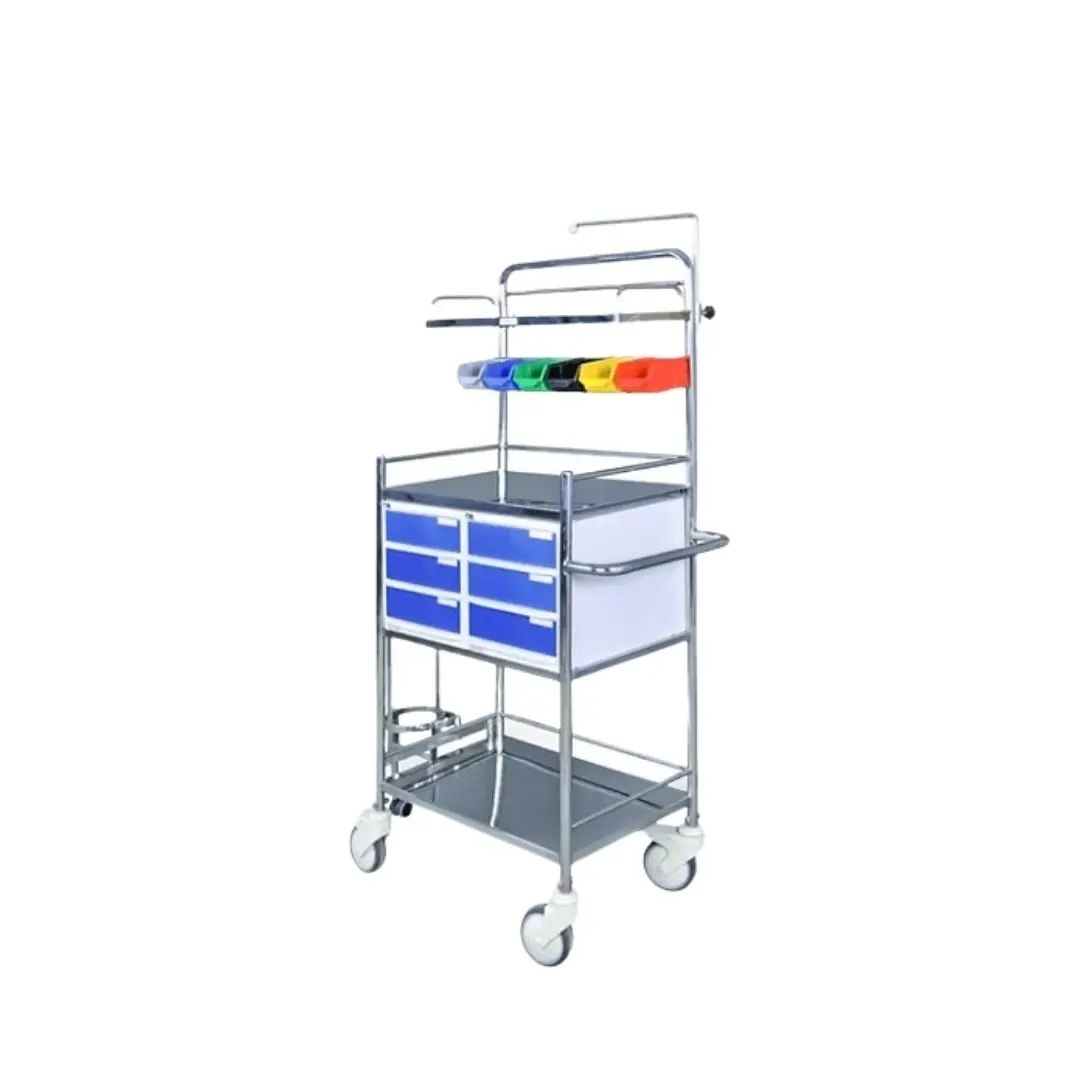
Emergency medical interventions require immediate, organized access to critical resuscitation drugs and life-saving equipment during cardiac arrest situations. How do high-capacity crash carts streamline emergency response times across busy intensive care units? Heavy-duty mobile resuscitation trolleys integrate color-coded storage drawers, central locking systems, built-in IV poles, and specialized equipment shelves to keep critical emergency supplies organized and instantly available when seconds count during medical crises.
Hospitals and trauma centers require durable, highly maneuverable emergency trolleys capable of navigating congested hospital corridors smoothly. How do ergonomic emergency medical carts maintain structural stability while holding heavy diagnostic gear? Sturdy stainless steel frames paired with smooth-rolling swivel casters, protective corner bumpers, and dual push handles ensure effortless mobility, long-term impact protection, and seamless bedside positioning during critical emergency room care.
Palak Enterprises is a reputable Manufacturer of medical-grade Crash Cart Trolley systems engineered for rapid emergency response. Every emergency cart features smooth telescoping drawer slides, anti-bacterial ABS work surfaces, and integrated power strip mounts for defibrillator units. As a trusted Supplier, we deliver custom emergency equipment trolleys built to withstand heavy daily hospital usage. Centralized keyless or breakable seal lock options guarantee immediate security compliance for controlled resuscitation medications.
Selecting the best Crash Cart Trolley ensures rapid equipment accessibility, improved nursing efficiency, and superior emergency patient care. Multi-tiered drawer layouts, slide-out writing trays, and oxygen cylinder holder attachments simplify emergency workflow management. Our commitment as a leading medical equipment Supplier guarantees long-lasting trolley durability and comprehensive technical support. Investing in reliable emergency resuscitation trolleys ensures clinical teams are always prepared for critical life-support operations.